
PLMD vs. SLMDC – Key Differences
| Feature | PLMD (Periodic Limb Movement Disorder) | SLMDC (Sleep Leg Movement Disorder of Childhood) |
|---|---|---|
| Focus | Repetitive, periodic leg movements during sleep | Broader spectrum of leg movements (includes non-periodic) |
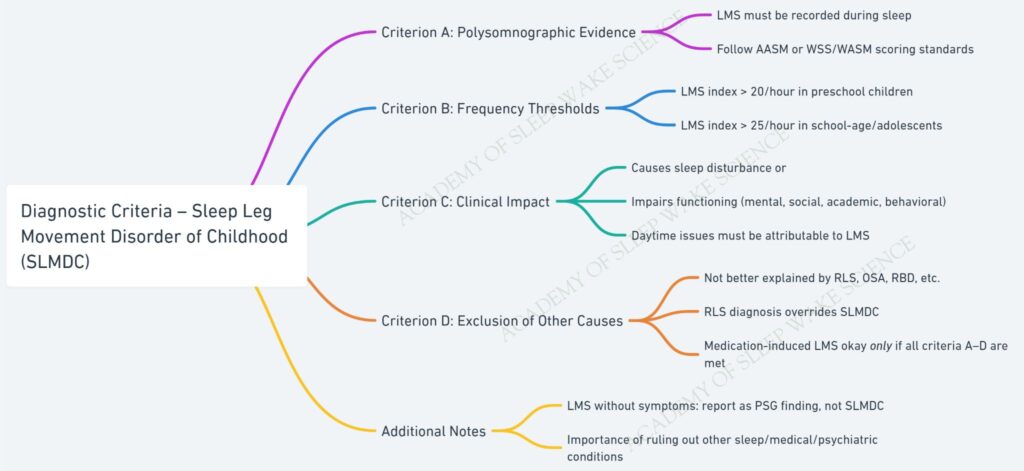
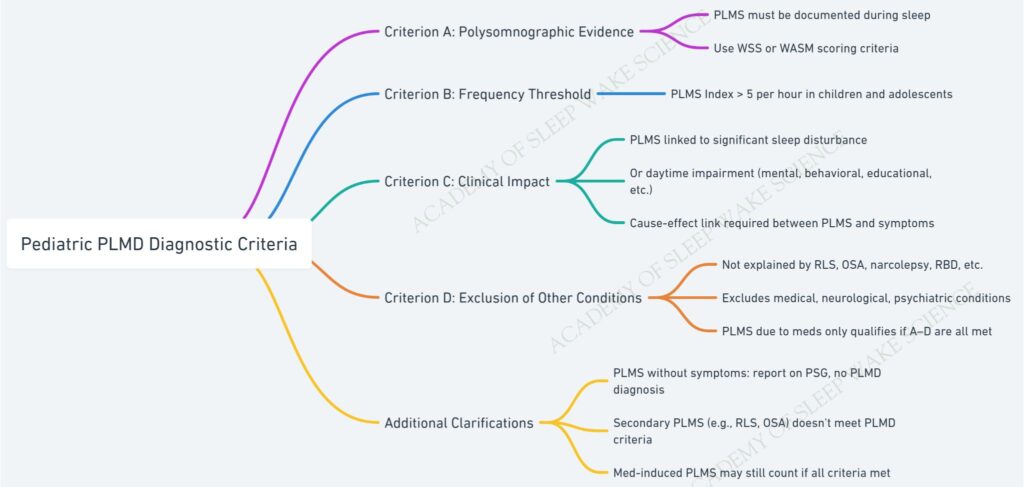
| Index Used | PLMS Index (Periodic LM ≥5/hr in children) | Total LMS Index (Leg movements ≥20/hr in preschoolers, ≥25/hr in older children) |
| Scoring Basis | Strict WSS/WASM periodicity criteria | Follows WSS criteria for LMS, but not limited to periodicity |
| Clinical Requirement | Must cause significant sleep or daytime impairment | Same requirement of significant impairment (sleep/daytime) |
| Comorbid Disorders | Cannot be diagnosed if RLS, OSA, narcolepsy, RBD are present | Same exclusionary rules, but includes cases not meeting PLMS periodicity |
| Typical Movement Pattern | Stereotyped movements at regular intervals (e.g., 20–40s) | Includes irregular, clustered, or non-periodic leg movements |
| Age Consideration | Mostly applicable to adolescents and older children with genuine PLMS | Designed for preschool and school-age children, where true periodicity is rare |
| Treatment Evidence | Dopamine agonists shown to reduce PLMS in some pediatric cases | Iron supplementation remains first-line; broader treatment personalization encouraged |
| Conceptual Framing | A subset under the broader SLMDC category | An umbrella diagnosis for pediatric sleep-related leg movements |
| Coding (ICD-10) | G47.61 – Periodic Limb Movement Disorder | G47.69 – Other Sleep-Related Movement Disorder (recommended until specific code created) |